
I am obsessed with castles and this year, 2026, is my Swiss castle visiting year. If you are as interested castles as I am join me or this lovely mini adventure.
https://www.dieschweizerschloesser.ch/en/our-castles
The phrase “There are 7 types of castles but no two are alike” perfectly captures the essence of medieval and military architecture. While historians group castles into specific chronological or structural categories based on their primary design, every single castle was a bespoke creation. They had to be adapted uniquely to the local topography (such as cliffs, rivers, or hills), the specific budget of the lord, and the rapid evolution of siege weaponry.
As many castles are often built over centuries they may begin as one type for castle but evolve into a combination of styles.
The 7 True European Castles Types (generally accepted but there is no universal list)
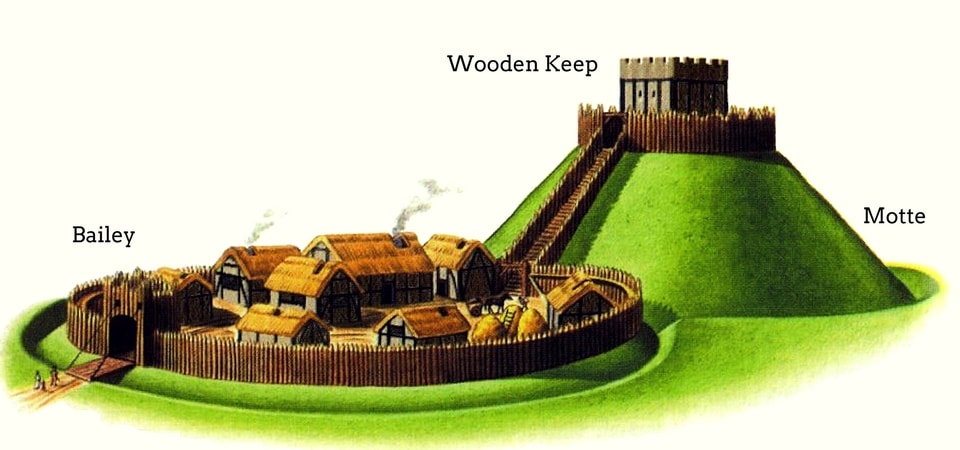
- Motte-and-Bailey Castles: (10th–12th century) The earliest medieval style , featuring a wooden keep built on a raised earthwork mound (motte) accompanied by an enclosed courtyard (bailey).
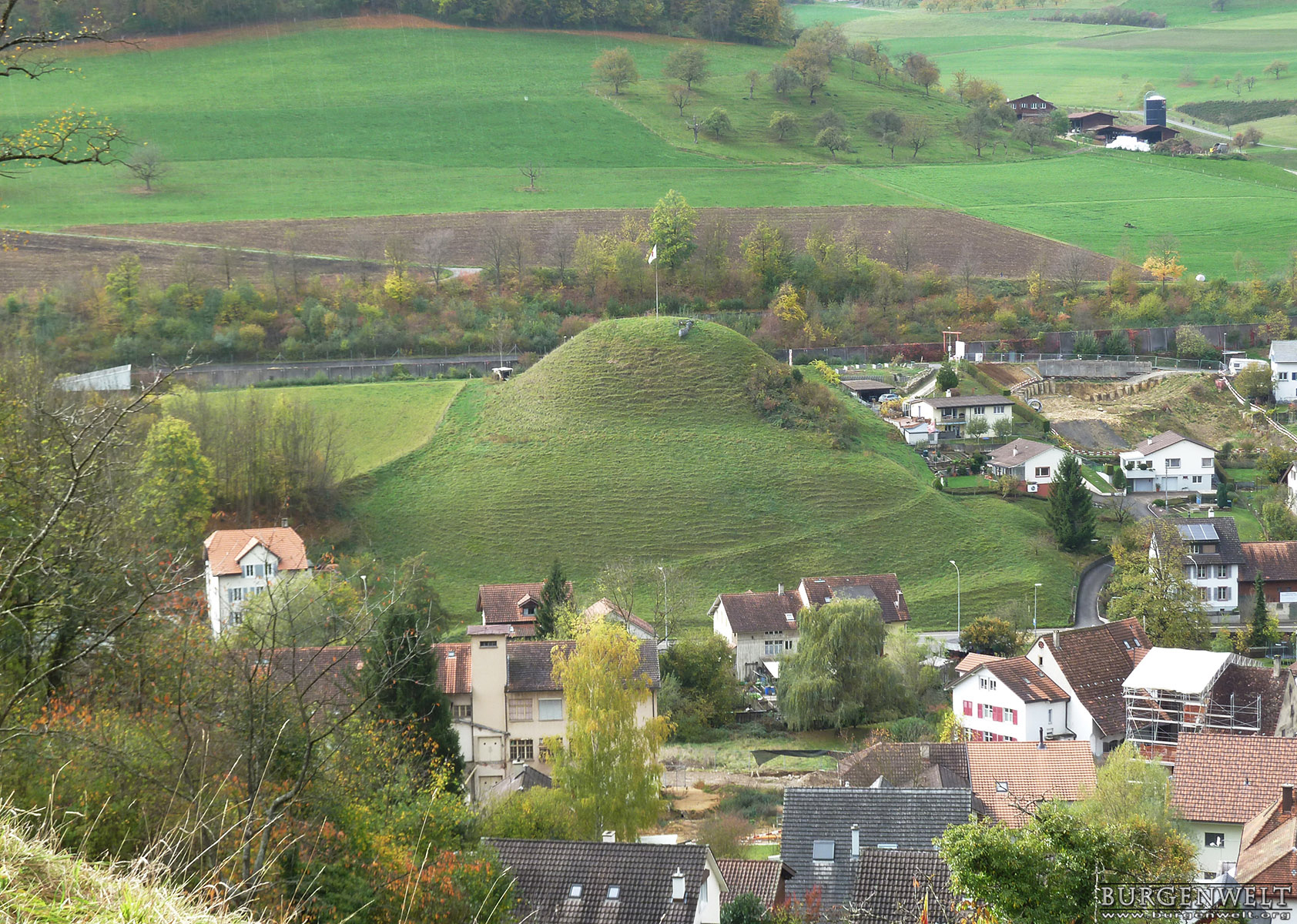
- Büchel, Zunzgen (Basel-Landschaft) Switzerland
- Shell Keep Castles: (12th – 13th Century) A transitional style where the wooden fence on top of an old earth motte was replaced by a thick, circular stone wall. All the living quarters and stables were built inside the circle.
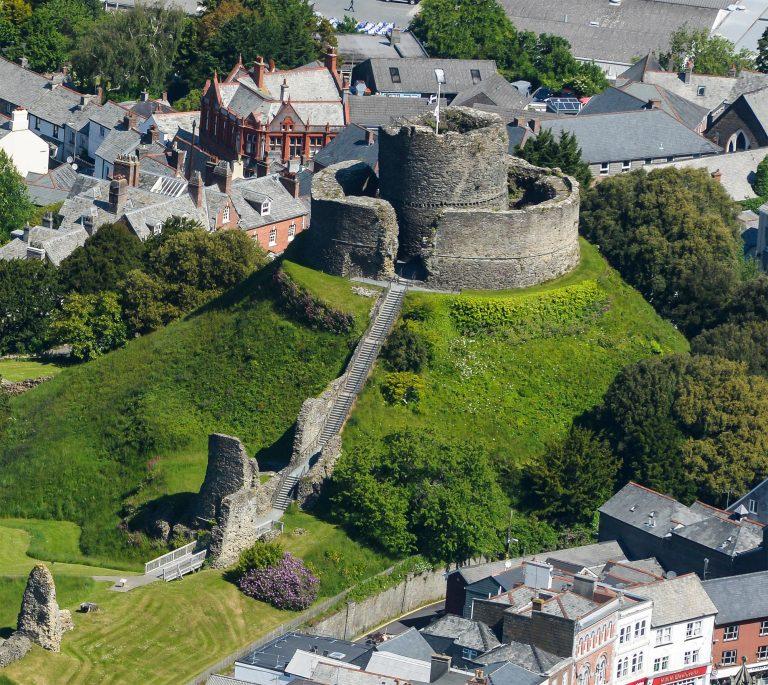
- Launceston Castle, in Cornwall, England
- Stone Keep Castles: (11th – 13th century) A direct upgrade to the wooden structures, replacing timber with massive, thick stone walls (like the Tower of London) to resist fire and heavy catapult fire.
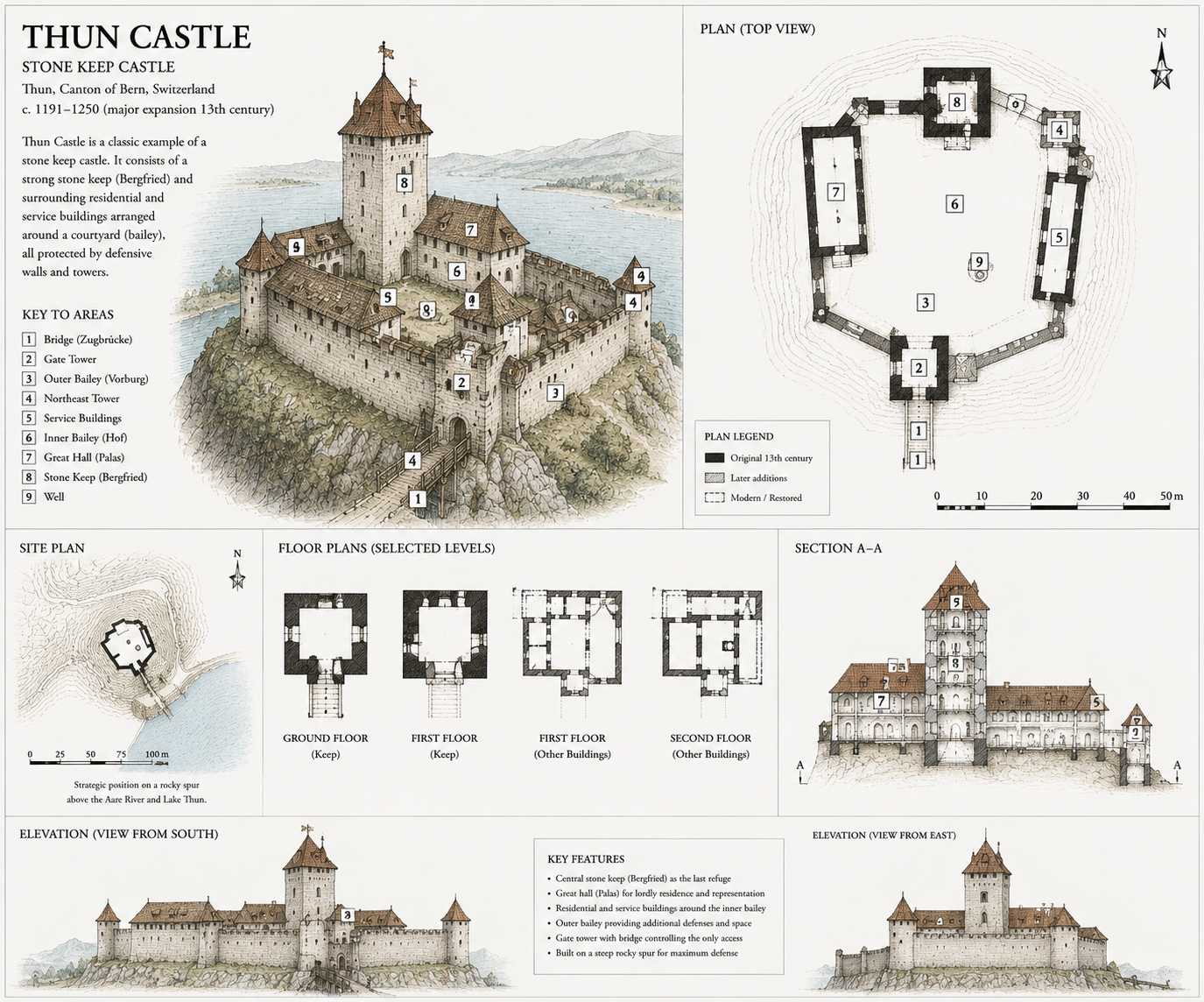
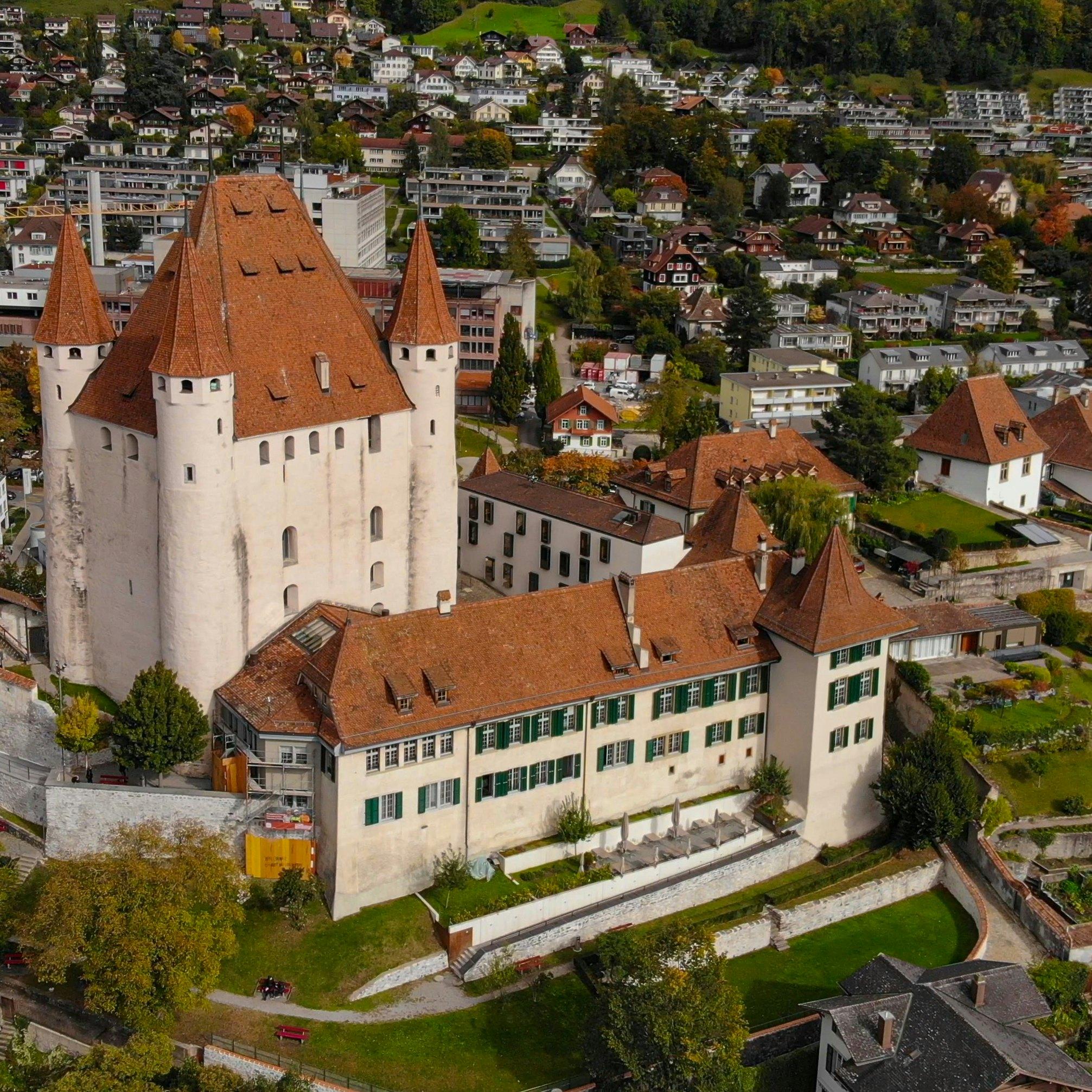
- Thun Castel in Canton Bern, Switzerland
- Concentric Castles: (12th – 14th century) The pinnacle of medieval design, featuring an “outer wall within an inner wall” layout to create multiple layers of defence.
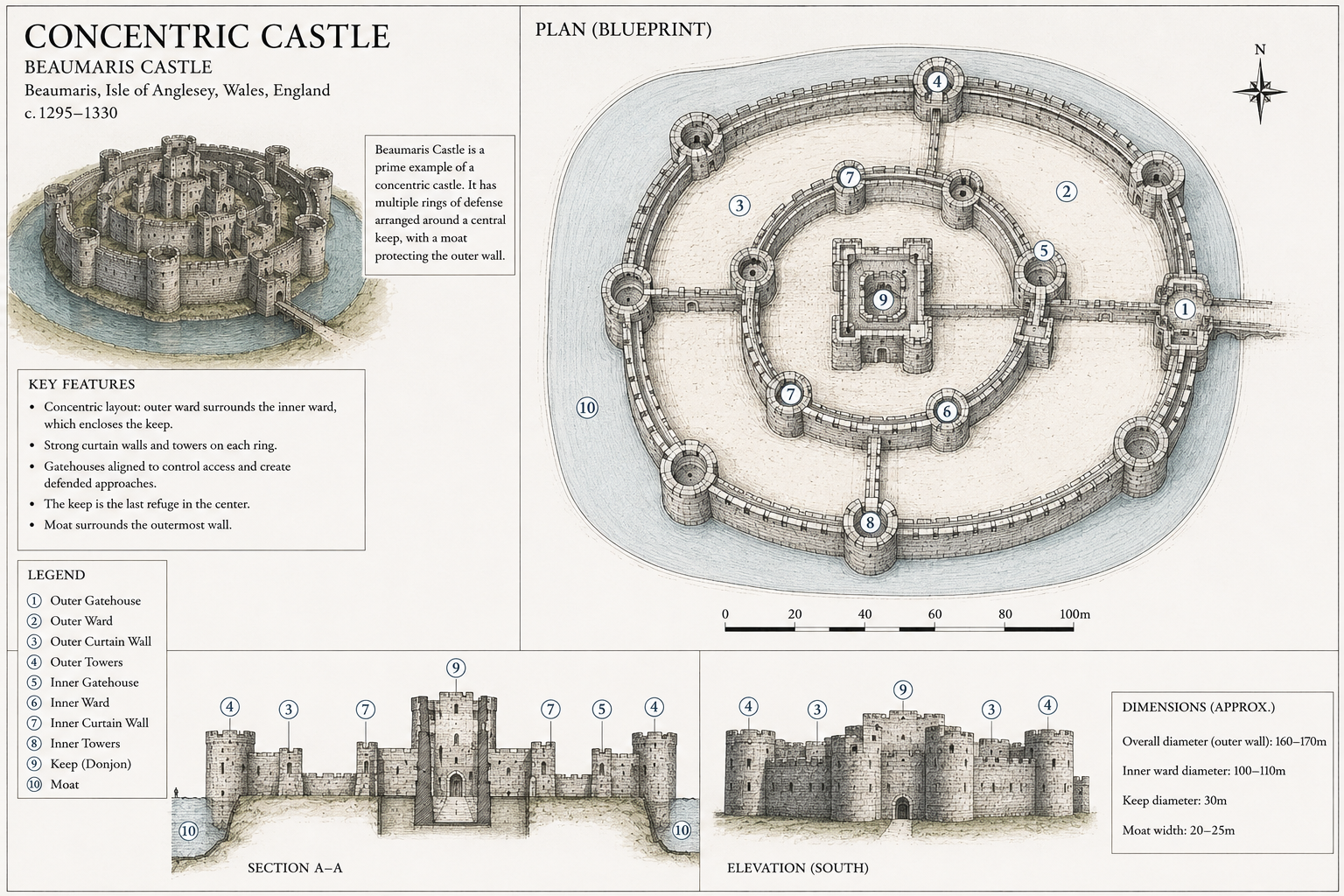
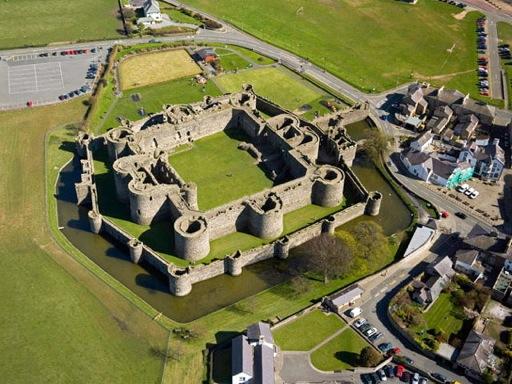
- Beaumaris Castle, Wales, England
- Quadrangular Castles: (14th – 15th Century)Castles built in a crisp square or rectangle layout with large defensive towers at each corner and an open central courtyard. Crucially, they lack a central “keep”—the living quarters are built right into the curtain walls.
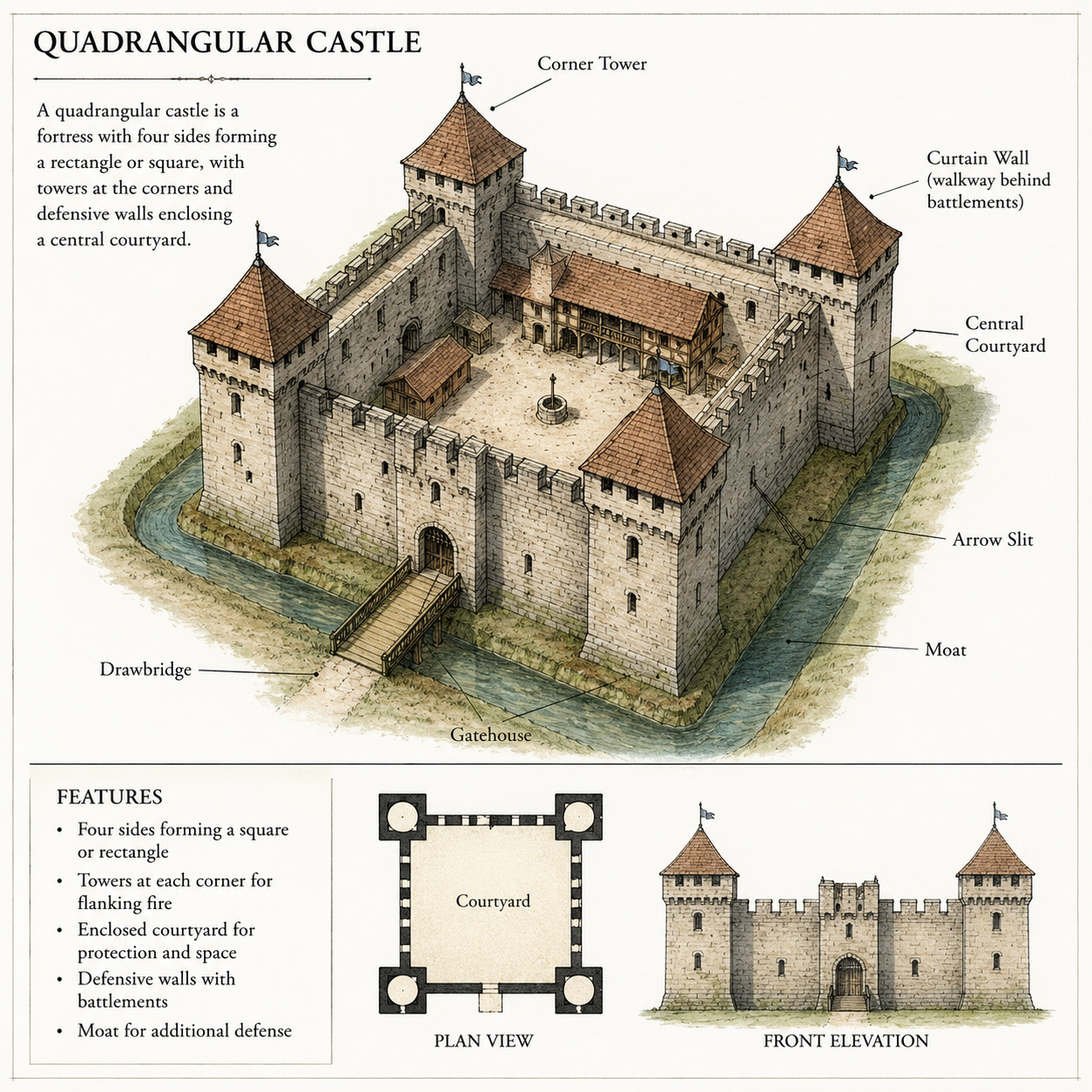
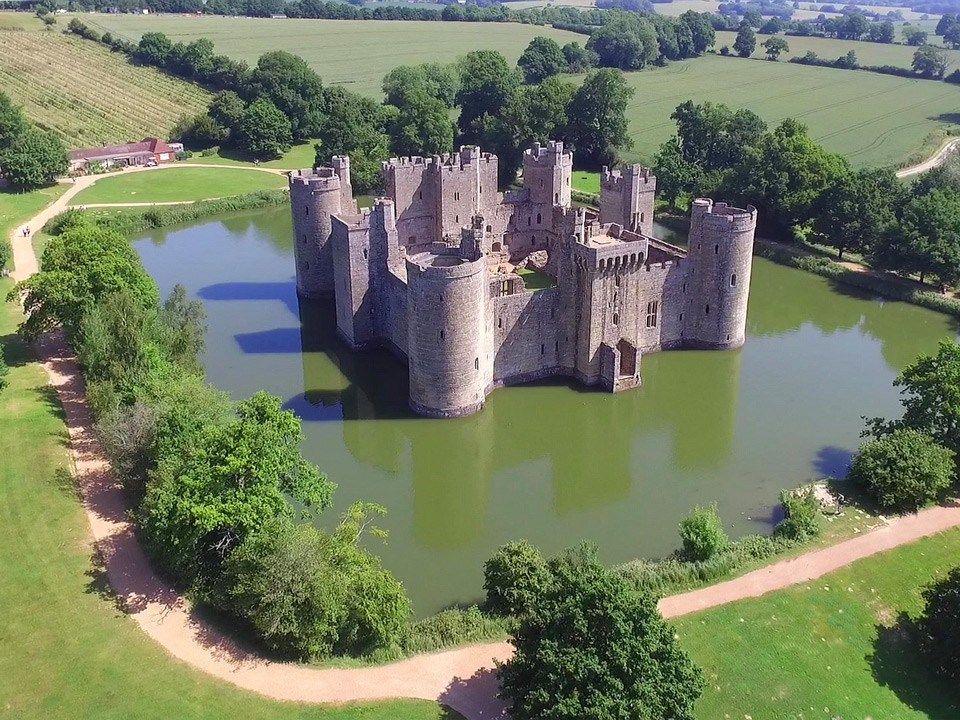
- Bodiam Castle in England
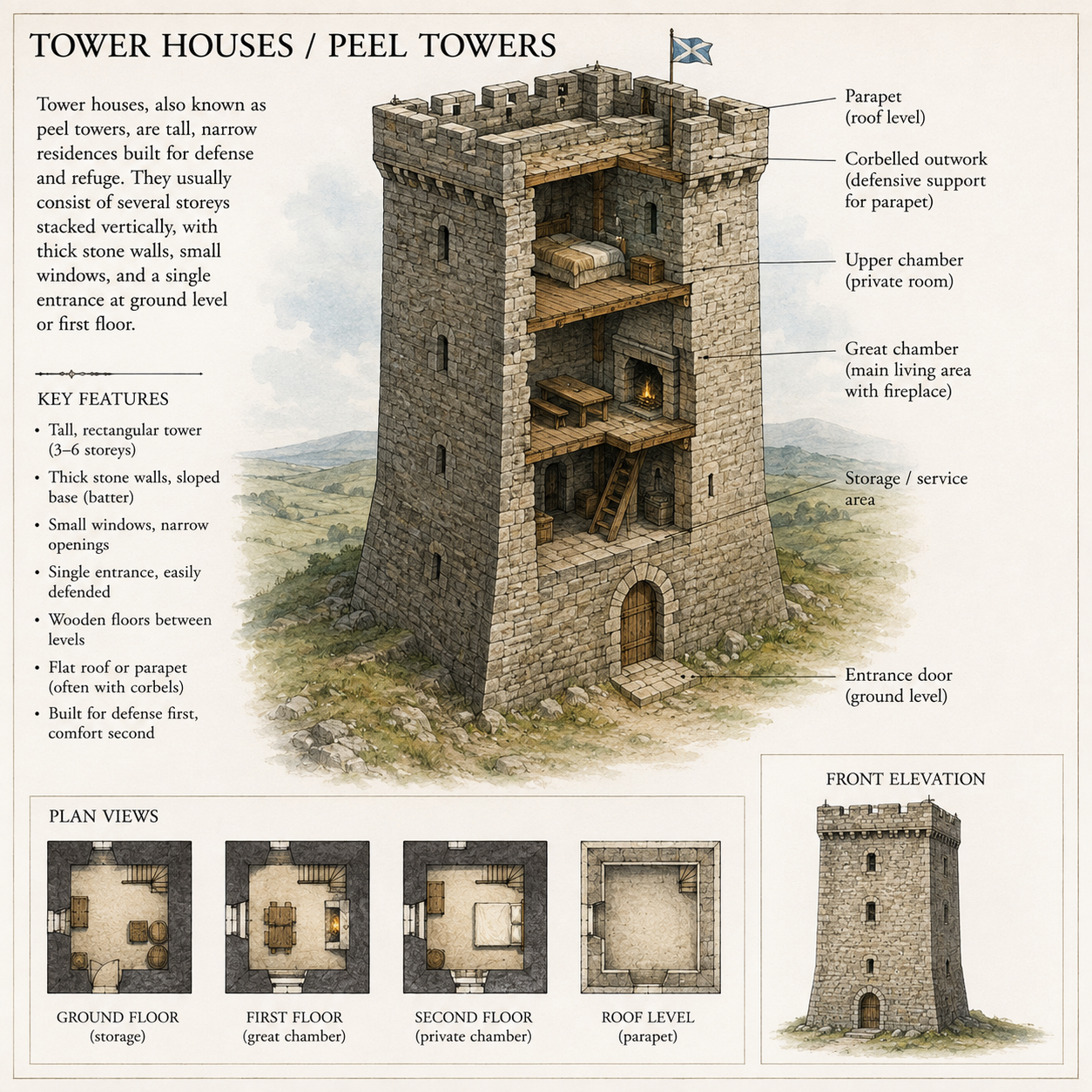
- Tower Houses / Peel Towers: (14th – 17th Century) Smaller, vertical, free-standing stone towers that functioned as a mini-castle. They typically had a stable on the ground floor, a hall on the first, and bedrooms on top. Exceptionally common in Scotland, Ireland, and the English borders, built by lesser nobility and wealthy gentry for defence against local raiders and bandits.
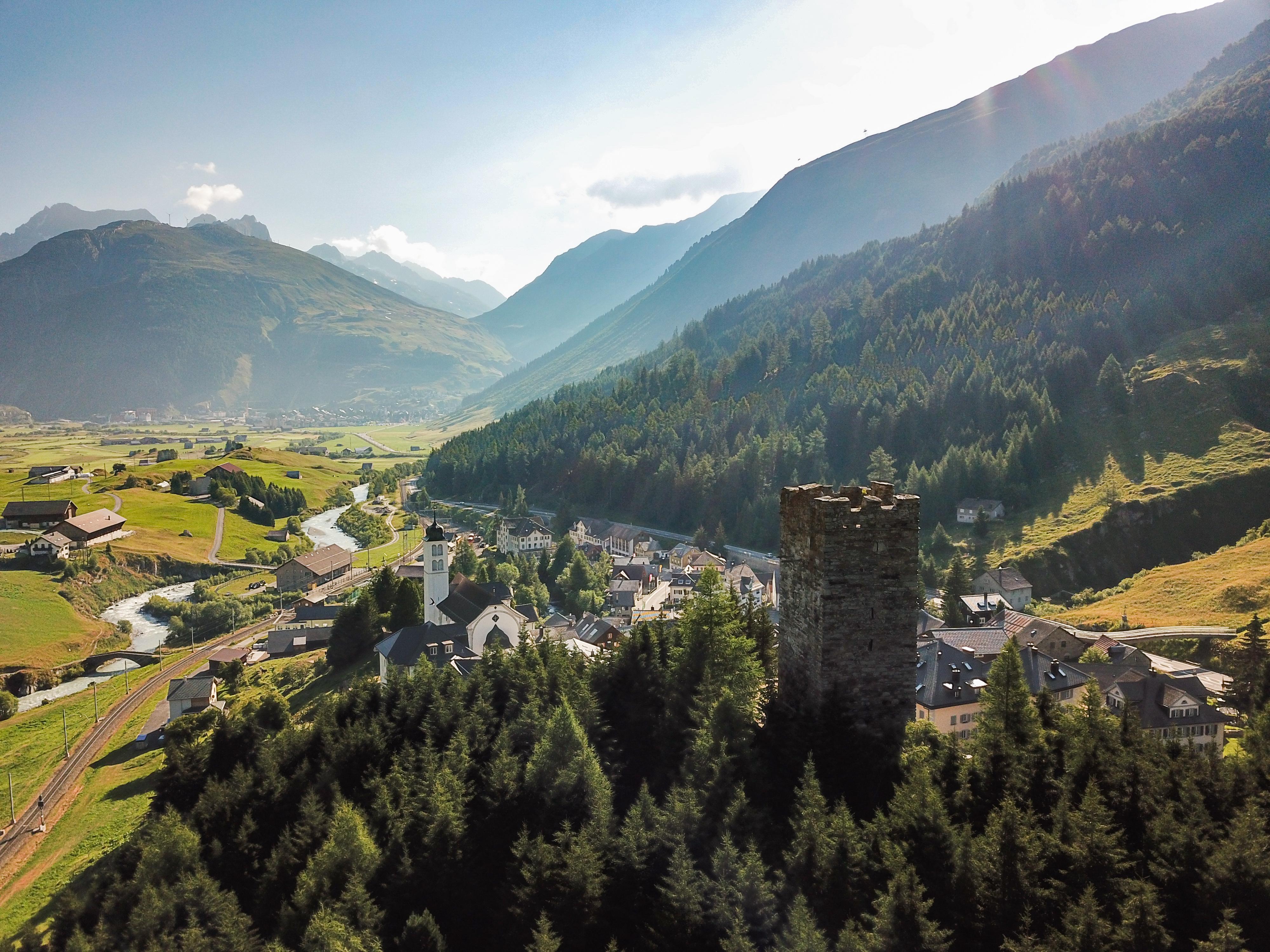
- Tower of Hospental, Canton Uri, Switzerland
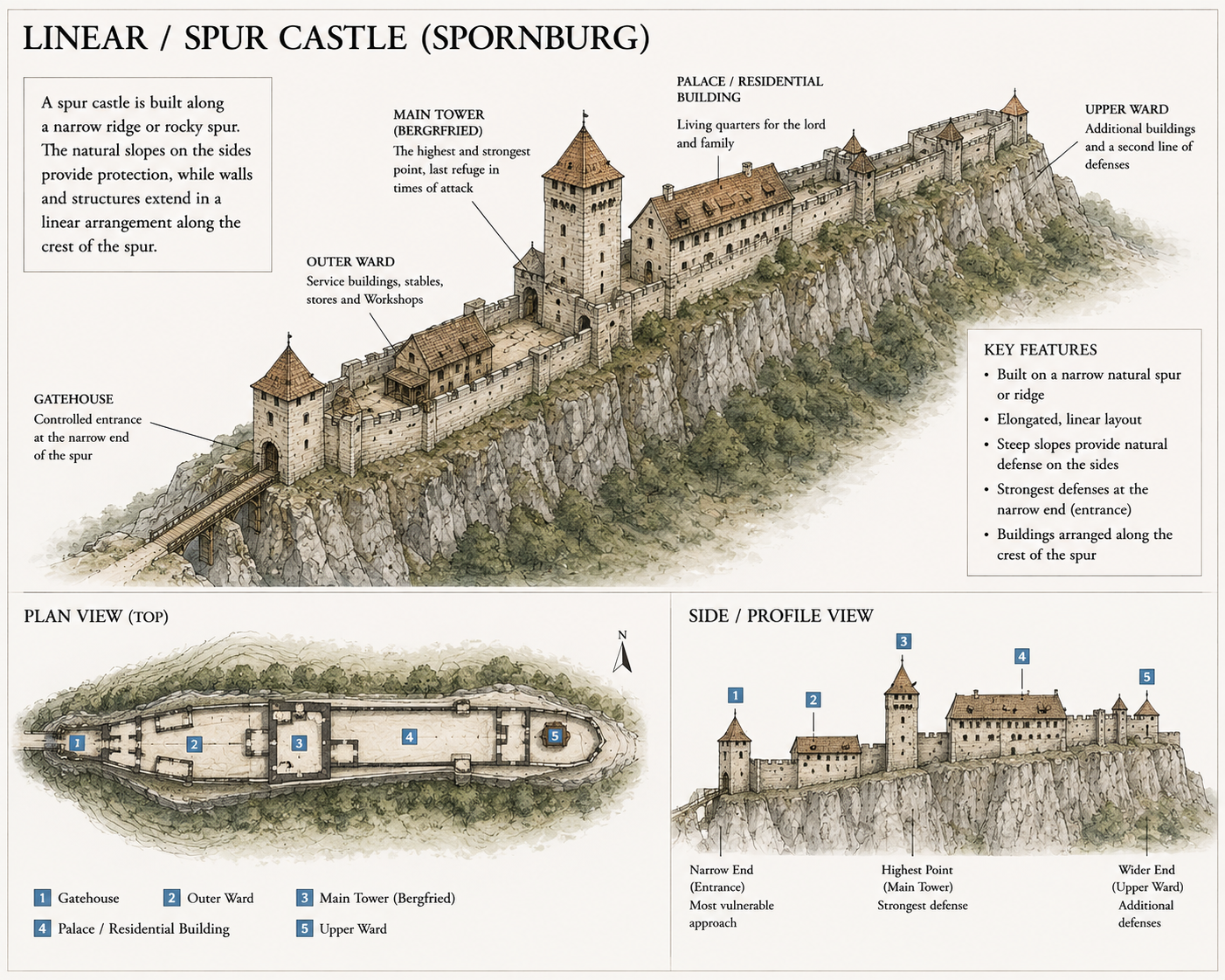
- Linear / Spur Castles: (11th – 15th Century) Castles that completely abandoned symmetrical layouts to conform strictly to European geography. They were built on narrow mountain ridges, rocky crags, or cliffs, using the natural terrain as the primary defence. Dominated Central Europe (especially Germany, Switzerland, and Italy) where the mountainous landscape dictated the architecture.
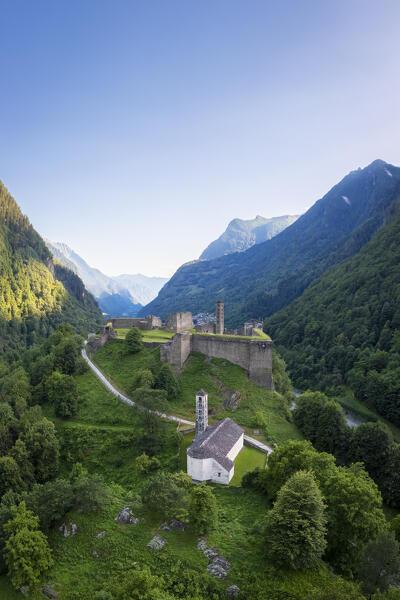
- Mesocco Castle in Graubünden, Switzerland
The other important structures sometimes found on the list (These are more fortifications or military structures than traditional castles)
- Coastal (or Marine) Castles: Purpose-built fortifications situated on coastlines or islands, heavily adapted to defend against naval invasions and secure vital shipping ports.
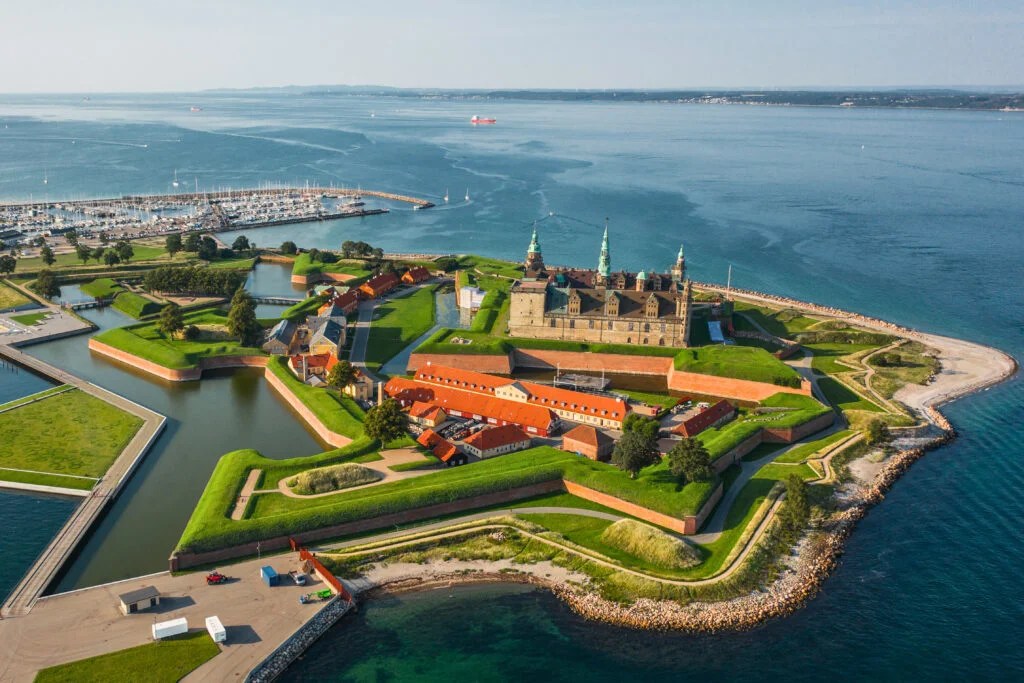
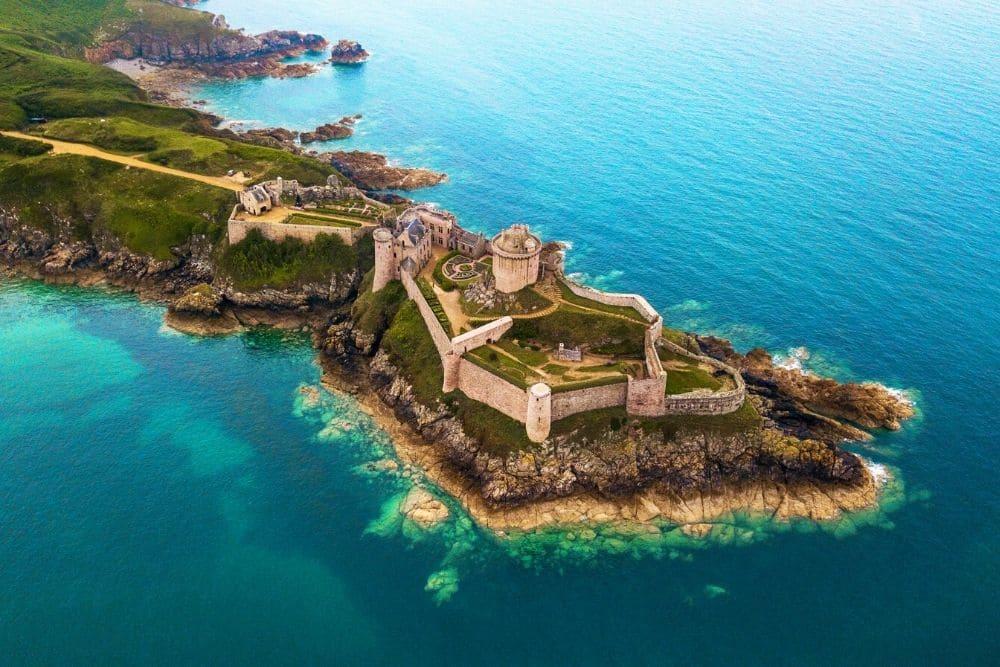
- Fort La Latte, Brittany, France
- Star Forts (Bastion Forts): Low, geometric, star-shaped fortifications developed during the Renaissance explicitly to withstand and redirect incoming gunpowder artillery fire.
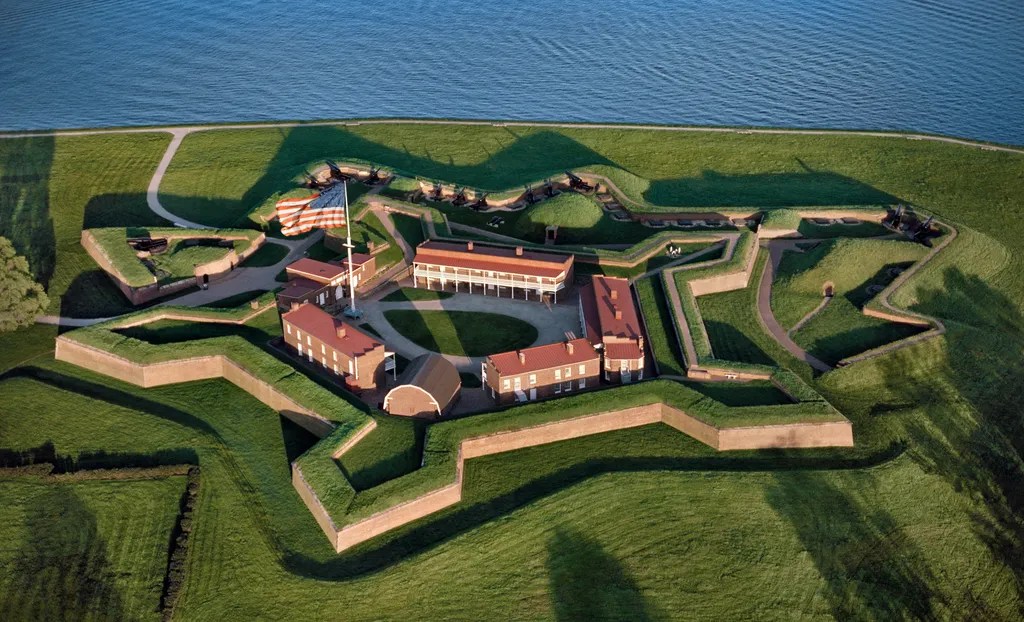
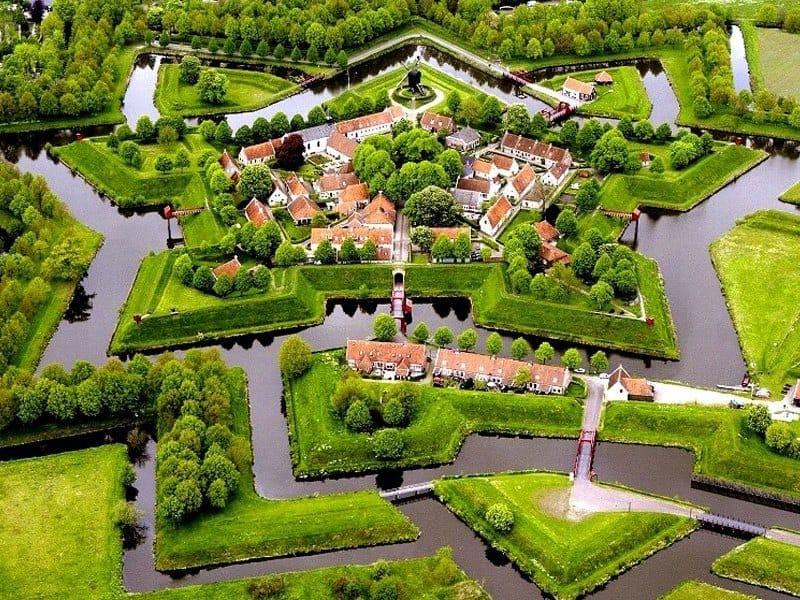
- Bourtange Fortress — Netherlands
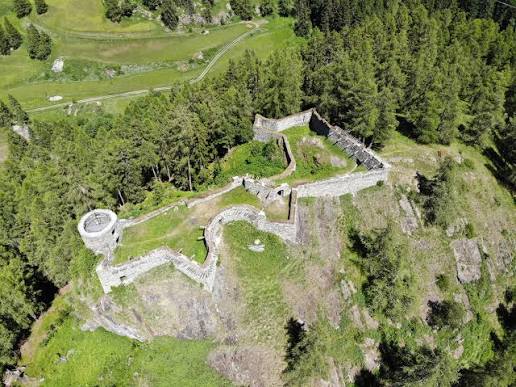
- Fortezza Rohan, Susch (Graubünden) Switzerland
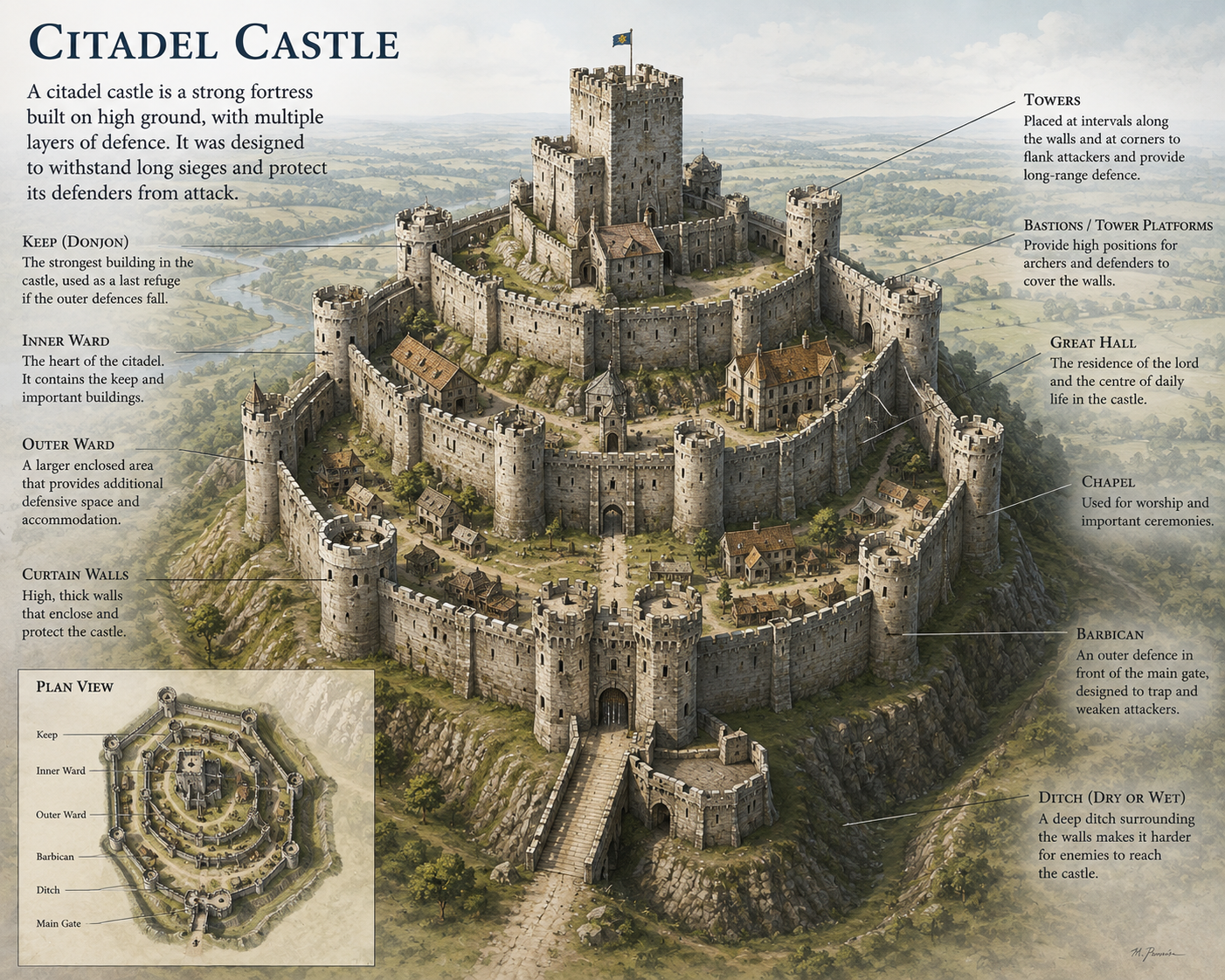
- Citadels: Heavily fortified core spaces built directly into existing walled cities, serving as the final military stronghold if the city walls fell.
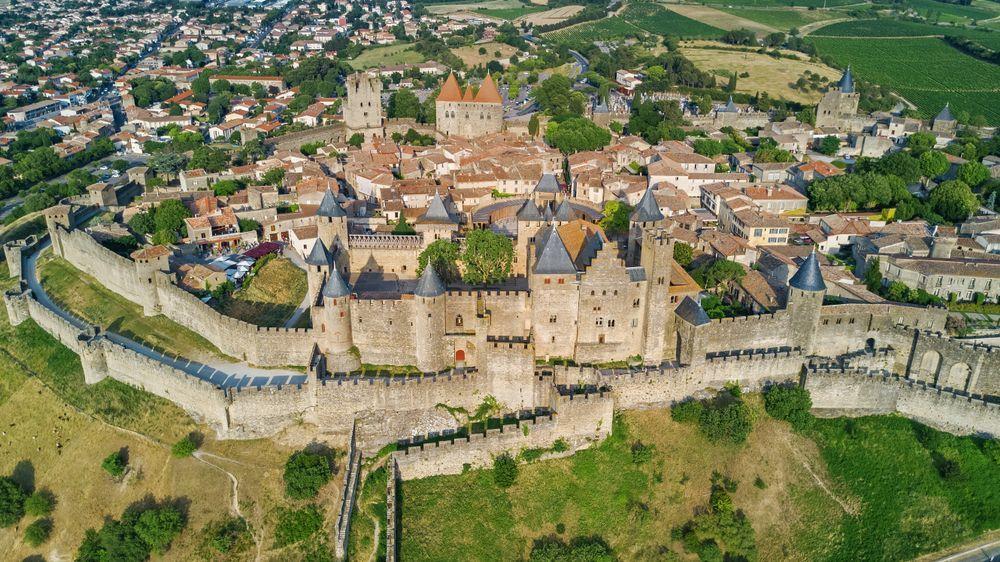
- Citadel of Carcassonne, France


